This is a demo store. No orders will be fulfilled.
Toggle Nav
|
|
How to Measure Dress Length: Dress Length Guide & Measuring
Posted:
MARCH 21, 2023
Categories:
Styling & Tips
One of the beautiful things about us as people is that we come in all shapes and sizes—each of us is unique—and so are the lives we lead. Naturally, that means some styles or cuts of clothing compliment us better than others, and dresses are no exception. In a world of online shopping, where every brand fits differently, this fact can make the process of finding the dress that best suits you all the more daunting. Luckily, finding the perfect dress isn’t so tedious once you know how to measure the length of a dress.
Why is it important to know dress length measurements?
Simply put, you should know what styles compliment your frame. There’s something romantic about finding the perfect dress. You don’t just glance at it, shrug your shoulders, and click ship. There’s a magic to it. You imagine yourself in it, where you’ll wear it, who you’ll wear it with. You’ve found something that allows you to express the part of you that makes you unique, and you can see yourself doing so—elegantly, playfully, seductively—in this potential expression of yourself. Why ruin that by guessing? In the post-modern age, we spend more time shopping online than we do in stores, and women are privy to the gift of a number of a number of dress styles—all with different cuts and lengths. It’s convenient, but if your purchase doesn’t flatter your shape or fit you or your style, it simply becomes a hassle. All of the excitement—the anticipation—is so easily spoiled my something that seems almost miniscule. A proper hemline is meant to elongate your proportions and will keep your silhouette looking long and trim. That’s why it’s important to know how to measure for the dress lengths most becoming of you.
How to Measure Length of Dress
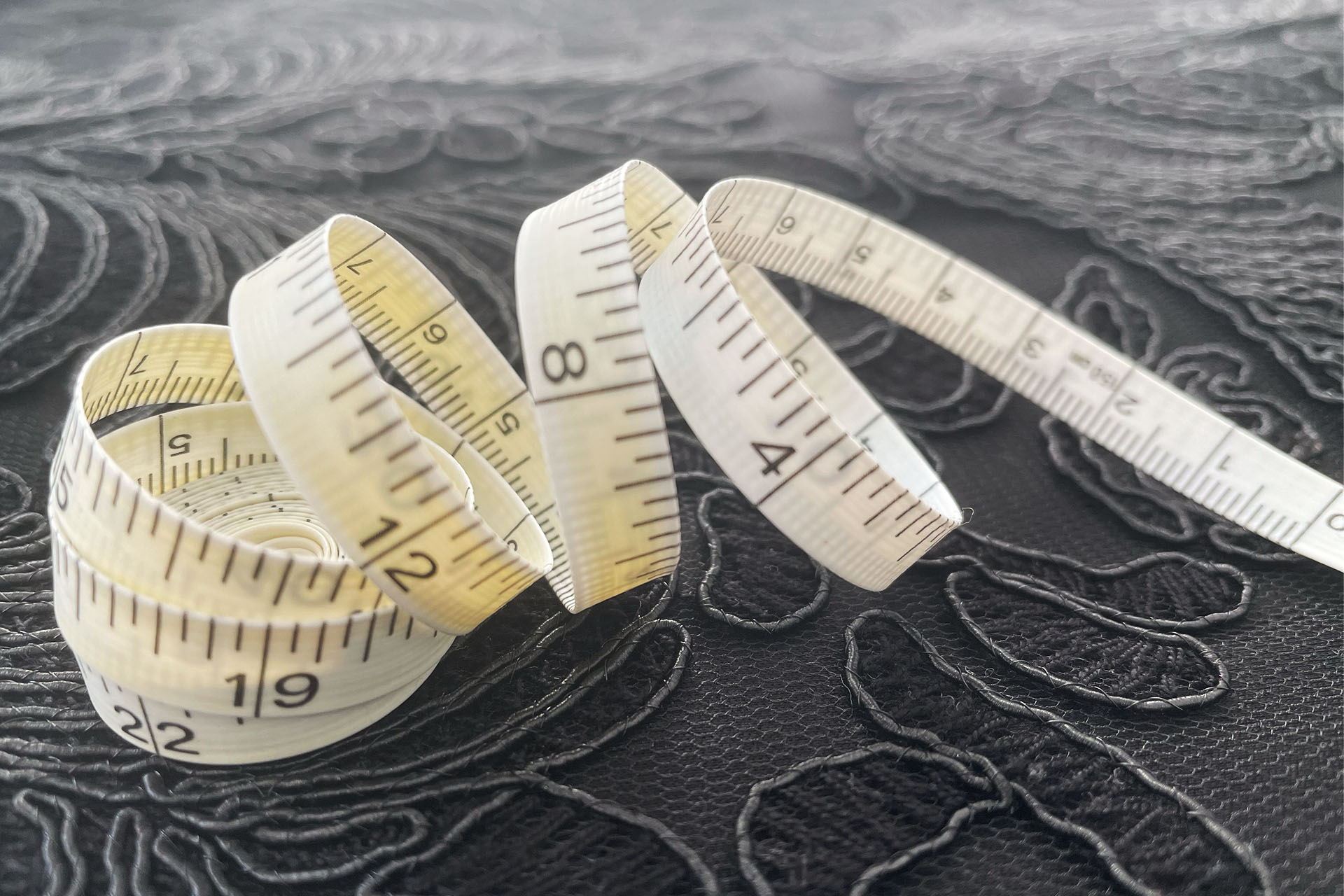
Learning how to measure dress length is not a difficult task and, as minute as it may seem, is a useful one to know. Not all brands share the same sizing standards, and this can be frustrating, but if you know your measurements, and the cut that best fits you, shopping becomes exactly what it should be: fun. It’s easy to measure dress length. The only tools you’ll need are a flat surface and measuring tape. To get started, simply lay a dress that you already know flatters your shape out on a flat surface with the front facing up. Be sure to smooth out any folds of fabric so it lays as flat as possible—this goes for any straps as well. Once the garment is completely flat, take your measuring tape and place the end at the top of the shoulder straps. From the top of the straps, measure all the way down to the bottom of the dress. If you’re measuring a dress with sleeves, start this exact process by measuring from the top of the seam on the shoulder; however, if the dress is strapless, you’ll need to try the dress on and measure from the hollow of your neck—right above the collar bone. This process may take an extra pair of trusted hands seeing as you’ll need to pull the measuring tape to the bottom of the dress. While finding your measurement, be conscious of how the dress responds to your movement. For example, when seated, an a-line dress rides up by an inch, while dresses with fitted hemlines ride up 2 inches. With these measurements, you can recognize the length—and styles—that will be the most flattering for your body type.
Dress Length Guide
Among the many styles of dresses, most fall somewhere between 30 and 62 inches—depending on the hem—and each one is best suited for different environments and compliments different body types. Here are a couple of key lengths to look for while updating your wardrobe.
Length of Mini Dress vs. Length of Maxi Dress
The two extremes of the spectrum are the mini dress and the maxi dress, and while their differences may be obvious, they also share some similarities. The hemlines of both the mini and the maxi dress elongates the visual proportions of the wearer. Whether you’re short or tall, thin or curvy, both of these styles will compliment any woman’s silhouette; nevertheless, as flattering as that mini dress length may be, it’s still crucial to know where and when it’s an acceptable dress choice.
The mini dress measures between 30 and 35 inches. It’s become fairly popular in the last few decades and for good reason. It amplifies the fun and flirtatious side of the wearer. The hem sits high above the knee so it’s not appropriate for all occasions, but it’s a great choice for a night out dancing or a day date with friends.
The maxi dress is another necessity for every closet. The length of a maxi dress ranges from 55 to 62 inches with a hemline that stops at the ankle and moves gracefully with the glide of your feet. Unlike the mini dress, the maxi dress is acceptable in countless settings. While this dress is a flattering style on all body types, the extra length adds some height to the wearer, making it especially perfect for those with a more petite figure.
The Tea Dress
The length of the midi dress—or tea dress— tends to fall somewhere between 41 and 45 inches. This classic style carries a studious and professional air about it, but the length of this dress can be precarious for some. To achieve a lengthier look, the hemline of any dress should end at the most narrow width of that part of the leg. The tea dress typically ends at the thickest part of the calf, and without some natural height or well picked shoes, the wearer runs the risk of appearing shorter than they actually are. This style is a great choice if you're looking to accentuate your natural height.
The Cocktail Dress
As it implies, the knee-length dress ends at the knee. You can expect this dress to be between 36 and 40 inches long. Although this dress has traditionally been reserved for semi-formal events, with the right fabric or styling, the cocktail dress is a safe choice for any occasion and will highlight the length of your legs. Petite women, however, will want to be more cautious, as this dress won’t add any length to your silhouette.
Dress for the Occasion
We live complex lives that require us to adapt to a myriad of different venues. If you’re planning to attend the ballet, or a fundraiser—events that call for the grandeur and polish of a gown—you should be prepared to float through the entryway in a fitted maxi dress. If you work in a very conservative business environment, you’ll want to wear a dress that speaks to your professionalism—like an a-line sweater tea dress. If you’re interning at a start-up company that has you running between classes and a casual office space, then you may be able to get away with a midi dress or a more casual maxi dress. Regardless, you should feel confident in what you wear in each environment. Every setting has its dress code just as every season has its style and every woman has her most flattering hemline, but that doesn’t mean you have to sacrifice your sense of style. That’s why we recommend every woman learns how to measure dress length.
As inconsequential as it may seem, understanding how to measure dress length is more practical than not. It’s not outlandish for you to want to feel confident in your dress. It’s a celebration of who you are. That’s why it’s important to know which lengths best compliment you—your dress should fit you and the environment you wear it in. Knowing a dress length measurement can be the detail that saves your look. For inspiration on how to style different dress lengths, explore some of the amazing looks Tadashi Shoji has highlighted this season.
Please visit our Size Guide for more details on Tadashi Shoji sizing & measurements.
My Wish List
Last Added Items
You have no items in your wish list.